Steel Stud vs. Wood Framing for Interior Walls
Both systems can produce excellent interiors. The right choice depends on the building, wall height, services, moisture exposure, fire and acoustic requirements, available fastening points and the finish expected.
Where steel studs perform well
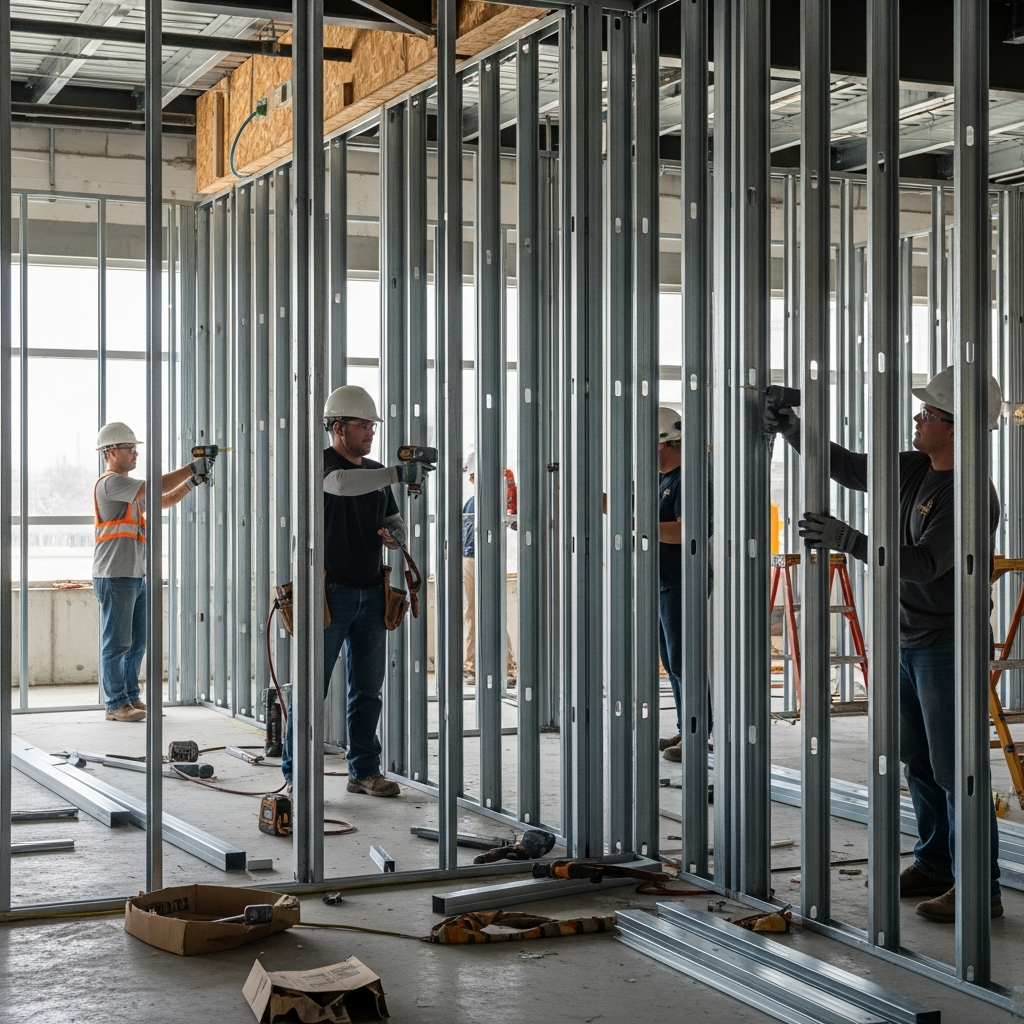
Steel framing is straight, dimensionally stable and well suited to commercial interiors, condominium renovations, tall partitions, bulkheads and assemblies that must coordinate closely with ceilings and services.
Where wood framing remains useful
Wood can be efficient for residential details, backing, short partitions and locations where conventional carpentry connections are practical. Existing construction often influences the best match.
The decision is an assembly decision
Stud material is only one part of the wall. Board layers, insulation, resilient components, backing, penetrations and perimeter details determine much of the finished performance.
Common questions
Is steel framing stronger than wood?
Strength depends on the complete design, member size, gauge, spacing, height, connections and intended load. The correct assembly should follow project requirements.
Can steel studs be used in a condominium?
Yes. Steel studs are commonly useful for non-load-bearing interior partitions, drops and features, subject to the building rules and project design.
Which system is better for sound control?
Acoustic performance comes from the complete wall assembly, not the stud material alone. Board layers, insulation, separation and sealed penetrations matter.