Smooth an Existing Ceiling or Replace It?
The right approach depends on adhesion, damage, previous coatings, ceiling flatness, service access and the finish expected under the room’s lighting.
When smoothing may work
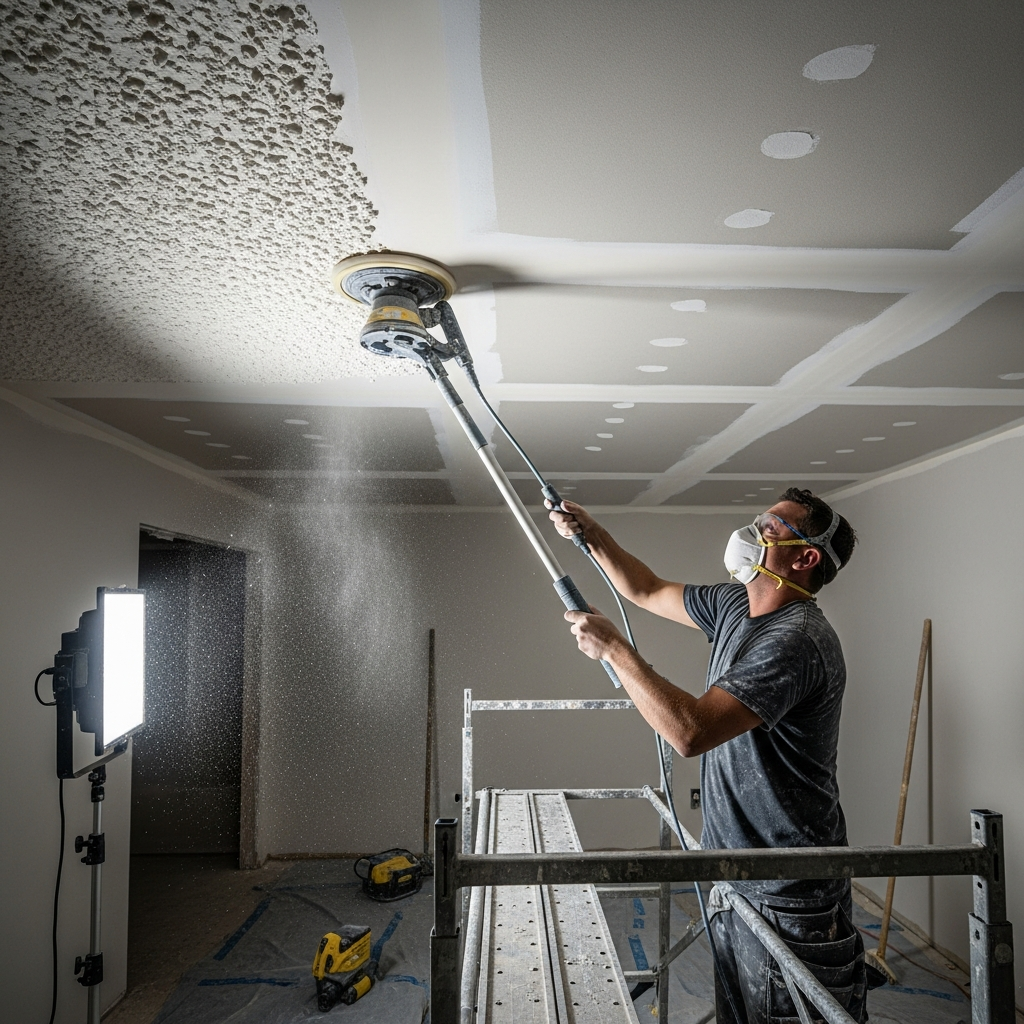
A stable, well-adhered surface can often be prepared and skimmed. Test areas help reveal coating or adhesion problems before full production.
When replacement may be cleaner
Extensive damage, loose texture, major irregularity or required service changes can make selective removal or new board more predictable.
Lighting reveals the result
Large windows and low-angle fixtures exaggerate surface variation. Finish expectations and lighting should be discussed before choosing the process.
Common questions
Can every textured ceiling be smoothed?
No. Existing materials, coatings, damage and adhesion need assessment first.
Is smoothing dust-free?
Surface work creates dust, but containment, extraction and controlled sanding reduce migration.
Will a smooth ceiling show more defects?
Strong side-lighting can reveal small variations, so preparation and finish level matter.